

How Laundry Affects a Septic System
A septic tank handles all the wastewater from a home that isn’t connected to a public sewer. Solids settle, bacteria break them down, and the liquid effluent moves out to the drain field where soil filters it.
Laundry stresses that process in three specific ways:
- Water volume. A standard top-loading washer uses 30–40 gallons per load. Run four loads on a Saturday and you’ve pushed 160 gallons through the tank in an afternoon — fast enough to flush solids out into the drain field before bacteria have broken them down.
- Surfactants. These are the ingredients that lift soil off fabric. In normal doses they’re fine. In heavy doses they pass through the tank and into groundwater.
- Fillers. Cheap powdered detergents are bulked out with clay carriers. Some use montmorillonite clay — a material used commercially to seal soil. That’s the exact opposite of what you want reaching a drain field.
Four laundry habits that protect your septic system
- Spread loads across the week. One or two loads a day beats six on Sunday. This is the single highest-impact change most households can make, and it costs nothing.
- Upgrade to a high-efficiency washer when it’s time. HE machines use roughly 15 gallons per load versus 30–40 for a standard top-loader — less than half the hydraulic load.
- Run laundry wastewater into the tank, not the drain field. Some older homes and DIY additions route the washer discharge straight to the field or a side line. Detergent residue plugs soil pores and the field fails. If you’re not sure how your laundry drain is plumbed, that’s worth having inspected.
- Install a lint filter on the washer discharge line. Synthetic microfibers don’t break down in a tank. A filter on the drain line catches them — clean it regularly.
Liquid, Powder, Pods, or Sheets?
The right format depends on what kind of septic system you have.
| Your system | Best format | Why |
|---|---|---|
| Conventional gravity-fed | Liquid, pods, sheets, or strips | No clay fillers to add to the sludge layer. Liquids disperse and break down faster. |
| Aerated (ATU / air pump) | Powder | Liquids foam heavily in the aeration chamber. Powder avoids that. |
| Any system | Skip cheap bulk powder | Clay filler is the main risk factor, and it’s concentrated in budget powders. |
That last row is the one most guides get wrong. It isn’t “powder is bad” — it’s filler that’s bad. A clean, short-ingredient powder like Molly’s Suds is a fine choice, and for an aerated system it’s the better one.
What to look for on the label
- Low surfactant content and biodegradable stated on the label
- Plant-derived (oleochemical) surfactants rather than petrochemical — they suds less, which matters in a tank
- No optical brighteners, no phosphates, no clay fillers
- Concentrated formulas — less product per load means less total load on the system
15 Septic Safe Laundry Detergents
We rebuilt this list for 2026. Several brands that circulate on other “septic safe detergent” lists — Mountain Green, Fresh Start, Ultra Citra-Suds — have been discontinued for years. Those lists are copying each other. Every brand below is currently available in the U.S.
Strongest septic credentials
| Detergent | Format | Why it’s on the list |
|---|---|---|
| Charlie’s Soap | Liquid, powder | Best-documented on this list. EPA Safer Choice certified, and the brand explicitly states septic safety. Four-ingredient liquid — no zeolites, enzymes, brighteners, or thickeners. |
| Molly’s Suds | Powder | Five ingredients, no clay fillers, EWG Verified. Brand states all products are septic-safe. The best pick for aerated systems. |
| ECOS (Earth Friendly Products) | Liquid | EPA Safer Choice certified across multiple SKUs. Brand states formulas are greywater- and septic-safe. Widely stocked. |
| Seventh Generation Free & Clear | Liquid | EPA Safer Choice certified. Brand states its laundry formulations are safe for septic systems. Available nearly everywhere. |
| Blueland | Tablets | Zero fillers, zero water. EPA Safer Choice and USDA BioPreferred certified. |
| Arm & Hammer | Liquid, sheets | The only mass-market brand that states on its own product pages that its cleaning agents are biodegradable and safe for septic systems. Cheapest option here by a wide margin. |
Also solid choices
| Detergent | Format | Note |
|---|---|---|
| Biokleen | Liquid, powder | Brand FAQ states products are safe for pipes and septic tanks. Concentrated, phosphate-free, plant-based. |
| Earth Breeze | Sheets | Brand states septic-safe and greywater-approved. No fillers, no water, minimal mass per load. |
| Tru Earth | Strips | Brand states safe for septic and greywater. Free of phosphates, dyes, and chlorine bleach. |
| Dropps | Pods | Plant-based, PFAS-free formula and packaging commitment. Low-dose. |
| Country Save | Powder, liquid | Fragrance-free, no optical brighteners, rapid-degrading ingredients. Thin retail distribution — mostly online now. |
| Dr. Bronner’s Sal Suds | Liquid | Highly biodegradable and clean-rinsing. Note: Dr. Bronner’s markets it as clean-rinsing, not specifically as septic-safe — the chemistry is favorable, but the brand doesn’t make that claim. |
| Dirty Labs | Liquid | Bio-enzyme, very low dose per load. No published septic claim, but low-filler and concentrated. |
| Puracy | Liquid | Plant-based, well-rated for ingredient safety. No published septic claim. |
| Mrs. Meyer’s | Liquid | Biodegradable, plant-derived surfactants, HE/low-sudsing. Widely available. No official septic-safe claim from the brand — the septic reputation comes from third parties, not SC Johnson. |
Septic-specific detergents often cost more per load than mainstream brands. Arm & Hammer and Seventh Generation are the two that close that gap.
The Worst Laundry Products for a Septic System
More useful than any “safe” list. Ranked by how much they actually matter:
1. Cheap bulk powdered detergent. The clay filler is the real problem. It adds to the sludge layer, slows tank processing, and can plug drain-field soil pores. This is the top offender.
2. Liquid fabric softener. Softeners work using cationic surfactants — chemically, the same family as disinfectant quats. They’re antibacterial by design, and unlike a sanitizer you use occasionally, softener goes in load after load. The petroleum-derived fats and thickeners also add to the floating scum layer. Dryer sheets are a non-issue — they never touch your water. If you want softness, dryer balls or a half-cup of white vinegar in the rinse are safer bets.
3. Laundry sanitizers. Products like Lysol Laundry Sanitizer work by adding quaternary ammonium compounds. Peer-reviewed research on anaerobic digestion shows quats inhibit the methane-producing bacteria that break down solids, and they bind to solids rather than degrading. Reckitt states the product is septic-safe; septic contractors disagree. Our take: no study has dosed an actual residential tank at label rate, so we won’t tell you it will kill your system — but save it for loads that genuinely need sanitizing rather than using it routinely.
4. Excessive bleach. Normal amounts won’t harm tank bacteria. Repeated heavy use will. Detergents with bleach built in are worth limiting.
5. Too much of anything. Overdosing detergent is the most common mistake we see. Modern concentrated formulas need far less than people use, and the excess goes straight into your tank.
Common Brand Questions
Is Tide safe for septic systems?
Per Procter & Gamble, yes — P&G states its laundry products are safe for homes with septic tanks, including aerated systems, when used in recommended amounts. Tide HE liquid is phosphate-free with biodegradable surfactants.
The distinction worth making is liquid versus powder. Liquid Tide breaks down faster and has no clay component. Powdered detergents — Tide included — contribute more to the sludge layer. And Tide with Bleach or any antibacterial variant should be used sparingly.
Is Gain safe for septic systems?
Same answer as Tide — both are P&G brands covered by the same septic statement, and both went phosphate-free after the 2010 state bans. Gain’s heavy fragrance load isn’t a bacterial problem, but it isn’t a selling point either. Liquid over powder, normal doses.
Is Arm & Hammer laundry detergent septic safe?
Yes, and it’s the best-supported answer of any mass-market brand. Church & Dwight states directly on its product pages that Arm & Hammer liquid detergents’ cleaning agents are biodegradable and safe for septic systems. The same claim appears on Arm & Hammer Power Sheets. It’s also the least expensive option on our list.
Are laundry pods safe for septic systems?
Generally yes, on a conventional gravity system. Pods contain no clay filler and deliver a controlled dose, which prevents overdosing. Avoid them on an aerated system, where the liquid concentrate can foam in the aeration chamber. Skip any pod variety with added bleach or antibacterial agents.
Are laundry sheets and detergent strips septic safe?
They have the strongest structural case of any format. No clay carriers, no water weight, and a very small mass of product per load. Earth Breeze and Tru Earth both state their products are septic- and greywater-safe. Those are manufacturer claims rather than third-party certifications, but the underlying chemistry supports them.
Is fabric softener safe for septic systems?
Liquid softener is one product we’d actively steer you away from — see the section above. Dryer sheets are fine. Wool dryer balls or white vinegar in the rinse cycle are the better substitutes.
Is Dawn dish soap safe for septic systems?
In household amounts, yes. Dawn is biodegradable, low-phosphate, and not antibacterial. The concern is volume, not chemistry — pouring large quantities down a drain can disturb bacterial balance. Avoid antibacterial dish soaps generally.
What’s the best laundry detergent for well water?
Well water in North Texas tends to be hard, and hardness changes the equation. Calcium and magnesium bind with surfactants before they can lift soil from fabric, so clothes come out dingy and you end up using more detergent to compensate. That extra detergent is exactly what your septic system doesn’t need.
A low-sudsing, plant-based liquid handles hard water better than powder. But the more effective fix is treating the water rather than fighting it — see below.
Where a Plumber Fits In
Let’s be straight with you: Justice Plumbing doesn’t pump septic tanks, install drain fields, or service tanks. For those, you want a licensed septic contractor.
What we do handle is everything between your house and that tank — and the plumbing problems that get blamed on septic systems when they’re actually something else.
Laundry and drain line issues
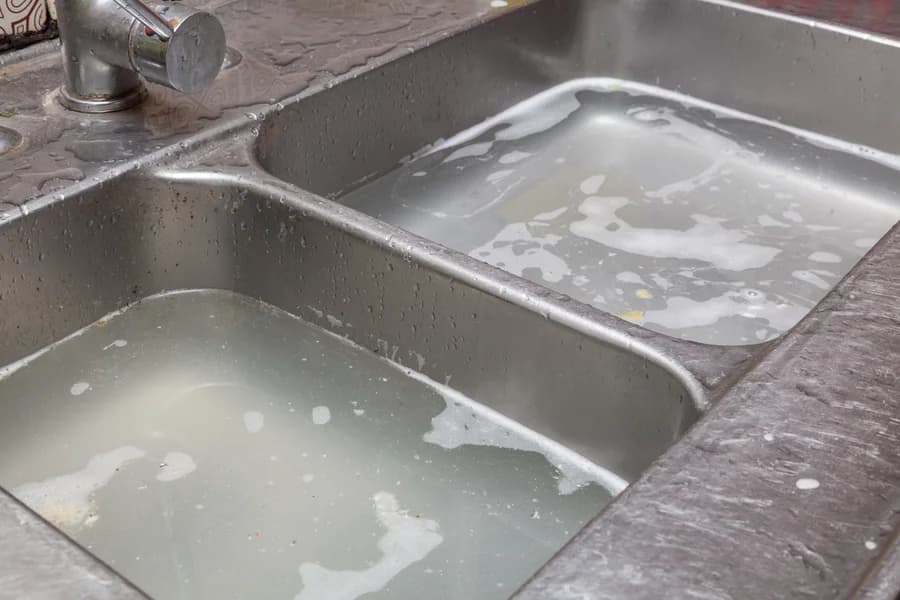
The drain line carrying wastewater from your laundry to your tank is plumbing, and it’s a common failure point. Lint, detergent residue, and soap scum build up on pipe walls and narrow the line over time. If your washer is backing up, draining slowly, or gurgling, the problem is usually in that line rather than in the tank.
- Drain cleaning — clears buildup and blockages in laundry and household drain lines
- Hydro jetting — scours detergent scale, grease, and soap scum off pipe walls when snaking isn’t enough
- Video camera inspection — shows you exactly what’s in the line before anyone starts guessing or digging
- Sewer line repair and replacement — for lines that are cracked, root-invaded, or collapsed
If your system uses a pump
Not every septic setup is gravity-fed. On acreage, on sloped Lake Granbury lots, and in homes with a basement or lower-level bathroom, wastewater has to be pumped up to the tank. That pump is plumbing, and it’s ours.
One thing worth knowing, because we see it done wrong: a grinder pump paired with a septic tank is the wrong combination and can cause the system to fail. Grinder pumps liquefy solids, which defeats the settling process the tank depends on. If your property is on septic and needs a pump, it should be a sewage ejector pump sized correctly for the application.
We install, repair, replace, and maintain lift stations, sewage ejector pumps, and grinder pumps — including systems we didn’t install. If you’ve got an active sewage backup, we’re available 24/7.
Hard water and well water treatment
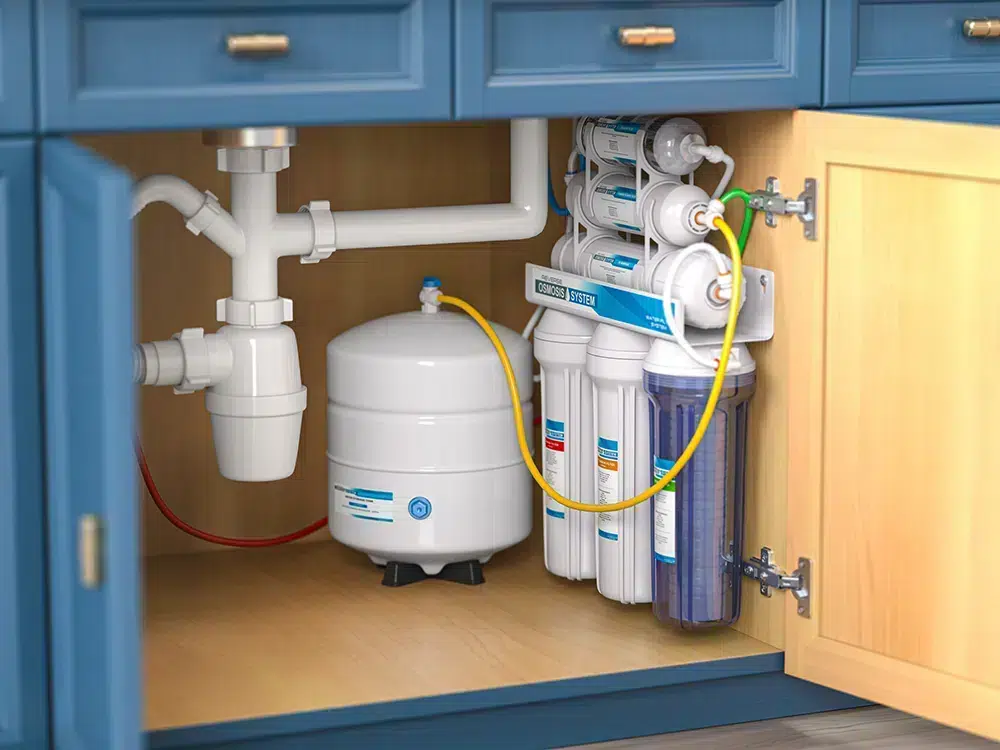
If you’re on a well, or on hard municipal water, treating it upstream solves the detergent problem at the source. Softened water means detergent actually works, so you use less of it — which is better for your clothes, your fixtures, your water heater, and your septic system.
- Water softening — removes the calcium and magnesium that neutralize your detergent. We size and install systems, including potassium-based units if you’d rather not add sodium to a septic system.
- Water filtration — sediment, iron, and taste issues common in well water
Not sure whether hard water is your problem? We can test your water and tell you what’s actually in it before recommending anything.
When it’s not the septic system
Slow drains, sewage odors, and backups get attributed to septic problems constantly. Often it’s a clogged line, a failed lift station pump, a dry or improperly vented trap, or a hidden leak. A plumbing inspection or leak detection visit tells you which it is before you pay for a tank pump-out you didn’t need.
Serving Septic and Well Country
We’ve been plumbing rural North Texas for 25 years, so we know these systems. If you’re in Granbury, Hood County, Somervell County, Parker County, Erath County, or Johnson County, we’re nearby and available 24/7 for emergencies.
The Short Version
- Spread laundry across the week instead of marathon weekend loads — biggest free win
- Use liquid, pods, sheets, or a clean short-ingredient powder; skip cheap bulk powder with clay fillers
- Powder for aerated systems, liquid for conventional gravity systems
- Skip liquid fabric softener; dryer sheets and dryer balls are fine
- Use sanitizers sparingly rather than routinely
- Use less detergent than you think you need
- Get the tank pumped on schedule by a septic contractor — no detergent choice replaces that
- Treat hard or well water so your detergent works and you can use less of it
Sources: Oregon State University Extension (detergent guidance for septic systems); Procter & Gamble septic system statement; Church & Dwight product documentation; U.S. EPA Safer Choice program; peer-reviewed research on quaternary ammonium compound inhibition of anaerobic digestion.



 All Service Areas